
How We Made a Routine Easier for £0 — A Reasonable Adjustment Story
I’ve been thinking a lot about reasonable adjustments recently — partly because I’ve been asked to speak about them, but also because it’s raised a bigger question for me: when is it appropriate to make an adjustment, and why?
What gov.uk says
The Education Hub describes reasonable adjustments as changes that help level the playing field, minimising the disadvantages disabled pupils face compared to their peers. It’s about responding to problems as they arise, so children can thrive.
Is it “reasonable”? The official criteria
There’s actual criteria used to judge whether an adjustment is appropriate:
1. Effectiveness — would it actually prevent or reduce the disadvantage?
2. Practicality — is it realistically doable?
3. Cost and disruption — what would it cost, and how much would it disrupt other activities?
4. Resources available — how much money or resource does the person or organisation have?
5. Financial help available — is funding or support available to help make the change?
6. Nature and size of the activity — a small charity is judged differently to a large organisation
7. Impact on a private household — would it disrupt the household or disturb the people living there?
In short: if an adjustment meets this criteria, it’s appropriate to put in place.
Our £0 example
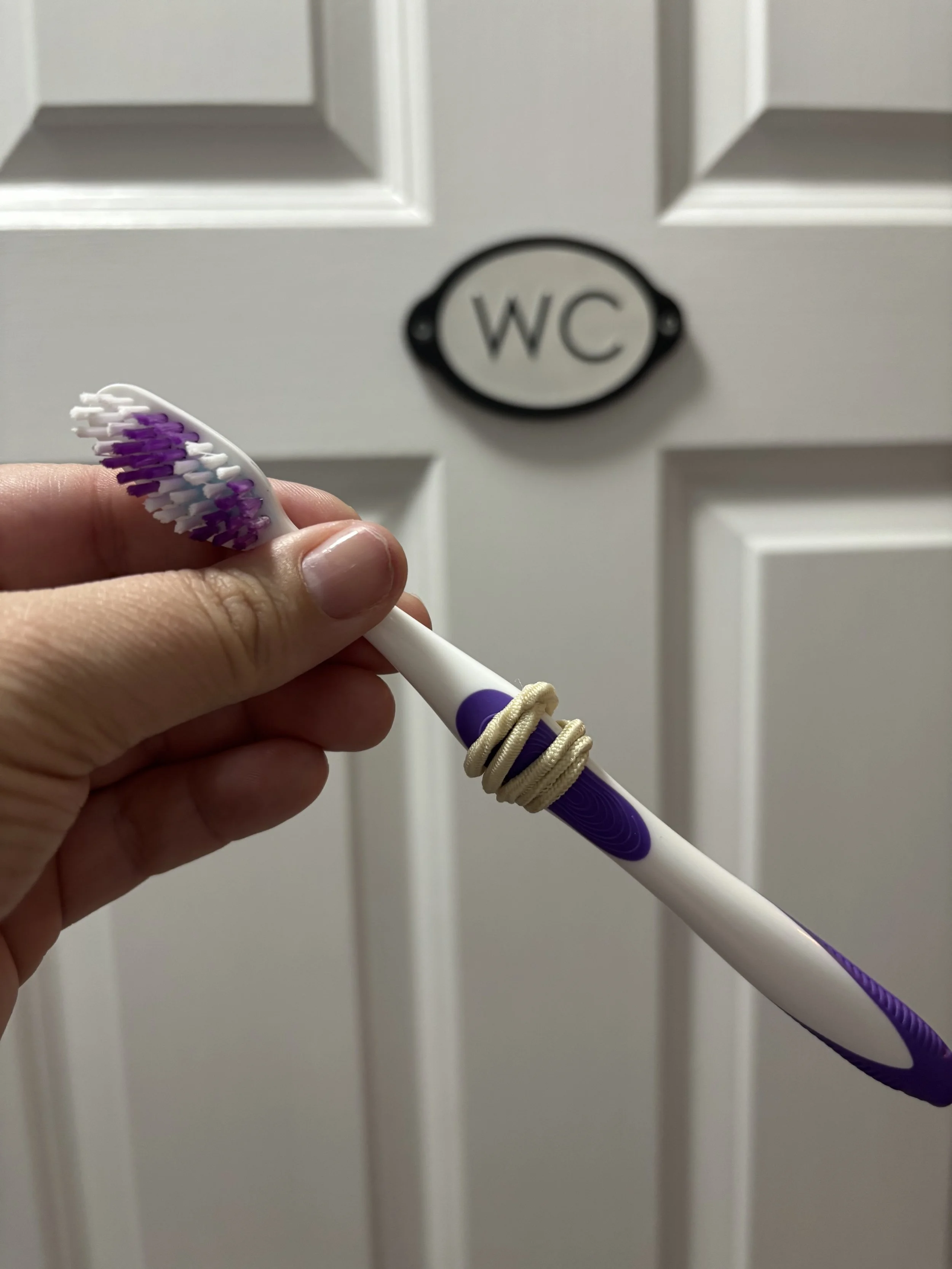
A member of my family is colour blind and struggles to tell which toothbrush is theirs. By wrapping a hairband around the handle, we made a simple adjustment that gives them independence, agency, and ownership over their own self-care.
It cost nothing. It took thirty seconds. And it made a real difference.
That’s the point I want to make: adjustments don’t have to be big or expensive to be meaningful.
Why I’m sharing this
I want more people to know what reasonable adjustments are — and that they don’t require huge changes. Often it’s the small things that make the biggest difference.
Here are just a few I’ve used over the years to help adults and children join in fully at events and in settings. This isn’t an exhaustive list — just a starting point.
Communication & understanding
• Signage with pictures to support meaning — I personally use Makaton symbols
• Picture signage on doors, for anyone who can’t read
• A translated card at my doctor’s surgery reading “if you need a translator, speak to someone at reception,” so people could hand it straight to reception
• Symbols to explain how to join in with activities
• Communication books between staff and parents, so families stay informed even when their child can’t tell them about their day themselves
Preparing people in advance
• Sending details of what will happen at an event beforehand, to ease anxiety
• Contacting parents ahead of events to ask how best to support their child, and what they’re interested in — then making sure something matching those interests is available where possible
During the activity itself
• Fidget toys available during training, so nobody has to struggle unnecessarily
• Never forcing a child to sit still for story time — letting them listen while engaged in an activity, so they can take in the story without the added struggle of sitting (I work with under-5s)
• Staff wearing lanyards with key symbols, to help explain what’s happening in the moment
Everyday choices
• Food menus with pictures
• Really, any choice presented with pictures